
The GNBCC Visits Ghana Food Movement to Strengthen Collaboration Under PSD2
- June 26, 2026
- Posted by: Paul N.
- Categories: GNBCC Updates, News Articles, Youth in Food

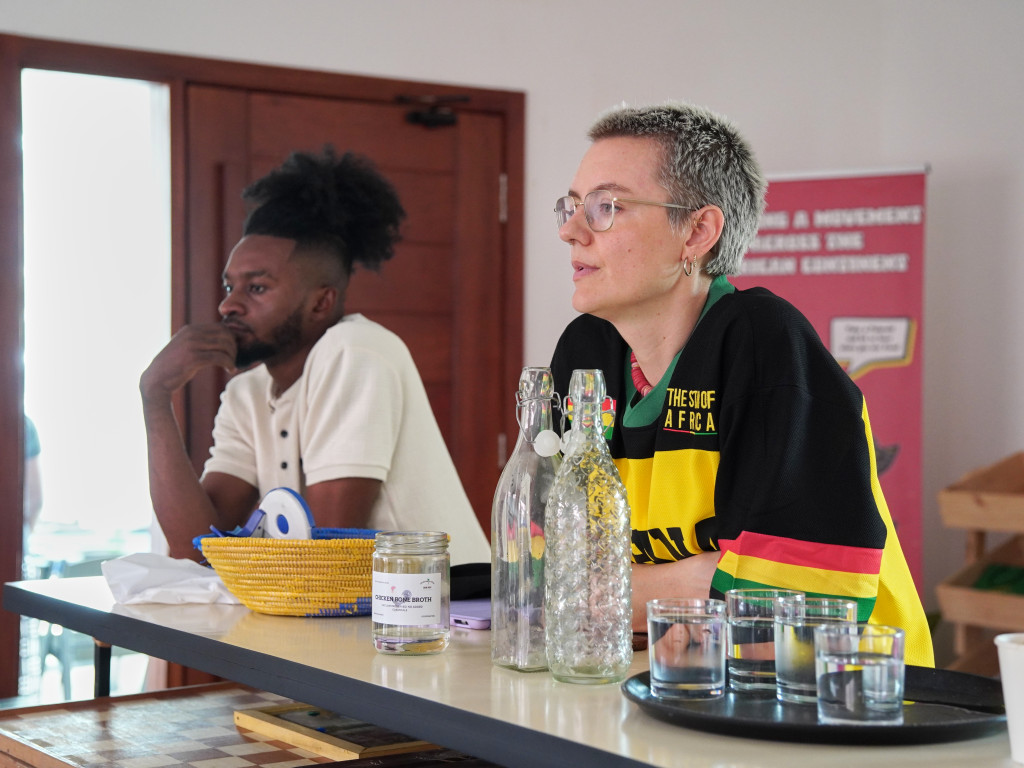
The Ghana Netherlands Business and Culture Council (GNBCC) and the Ghana Food Movement (GFM) recently held a strategic engagement at The Kitchen in Osu to deepen collaboration within Ghana’s horticulture ecosystem under the Private Sector Development Programme (PSD2). This session allowed both teams to introduce ongoing initiatives, explore areas of synergy, and strengthen partnerships aimed at improving market systems and agricultural development outcomes.
The session began with introductions from the GFM team, led by Pauline Lingg, who shared the organization’s growth journey from a small initiative into a broader network of food system actors, including chefs and farmers across the country. She reaffirmed GFM’s commitment to promoting local food systems and supporting agricultural producers through practical, community-driven approaches.
Speaking on behalf of the GNBCC, General Manager, Hilde Famaey, outlined the vision for the next phase of PSD2, emphasizing a shift towards stronger collaboration and integration among stakeholders. She noted that future interventions would move away from siloed implementation and instead focus on joint action across programmes to ensure greater impact and sustainability.
She further highlighted the importance of coordination across Dutch-funded initiatives such as Agriterra and Orange Corners, stressing the need for broader stakeholder engagement across the horticulture value chain to support practical and scalable solutions.
A key part of the session featured programme presentations from GNBCC project leads. Tracy Mensah delivered a presentation on the Horticulture Business Challenge (HBC), highlighting its expansion up-country under PSD2, strengthened collaboration with POMBI, enhanced alumni engagement, and continued support for agribusiness entrepreneurs. She also provided an overview of the Women in Business Programme, which continues to empower female entrepreneurs through business development, networking, and capacity-building support.
Benjamin Agamah presented on the Horticulture Business Platform (HBP), explaining its evolution from a capacity-building and compliance-focused initiative into a digital marketplace designed to connect farmers, producers, and buyers. He noted that the platform plays a key role in improving market access and facilitating business linkages within the horticulture sector. Plans to introduce regional chapters were also shared, aimed at strengthening local engagement and improving coordination across the country.
Discussions during the meeting reflected practical challenges within the sector, particularly concerns raised about farmers in the Upper East Region who struggle to access reliable markets despite high production levels. In response, it was explained that the proposed regional chapters would help bridge these gaps by improving communication between producers and buyers, enabling better exchange of market information, and strengthening regional trade linkages.
The idea of introducing horticulture talk shows was also presented as a means of creating platforms for dialogue around industry challenges, policy issues, and emerging opportunities within the sector.
Further discussions touched on the SME Support Desk, presented by Naana Biney Ohemeng, which focuses on providing SMEs with practical support in accounting, human resource management, and marketing to enhance overall business sustainability and export readiness.
The Ghana Food Movement also shared plans to leverage some youth and food platforms for broader community engagement, awareness creation and educational events, potentially hosted at some universities in Ghana to deepen public understanding of food systems and sustainability.
Key issues raised during the engagement included the need for stronger market linkages, improved transportation infrastructure, and the development of more sustainable supply chains connecting producers, processors, and buyers. The teams also emphasized the importance of enhancing visibility of ongoing initiatives and strengthening stakeholder engagement to improve overall programme effectiveness.
In concluding remarks, the General Manager highlighted the Netherlands’ long-standing interest in horticulture, noting its significance within Dutch agricultural exports and its influence on continued investment in Ghana’s agriculture sector.
The engagement concluded with a networking lunch, providing an informal setting for further discussions and relationship building between teams.
The engagement reinforced the partnership between GNBCC and GFM, establishing a shared commitment to integrated action and sustainable growth across Ghana’s horticulture value chain.





Leave a Reply
You must be logged in to post a comment.